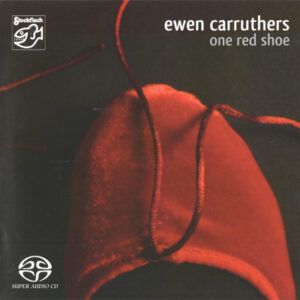
Ewen Carruthers – When Time Turns Around (2006, 24-44.1)
When Time Turns Around is Ewen Carruthers’s first Stockfisch release, built from concise story-driven songs and economical arrangements. For audiophile listening, the attraction is not simply resolution; it is the way the recording lets musical events occupy believable space.
TRACK LIST

- LabelStockfisch Records - SFR 357.6037.2
- CountryGermany
- Release date2006
- GenreFolk
- FormatFlac 24bit/44.1kHz
Sound Quality
Vocal chest resonance, guitar texture, supporting instruments and micro-dynamics. These qualities are most revealing when the system keeps the tonal balance natural and the stereo image stable, allowing the character of the recording to remain intact. The important point is balance: detail should support the musical picture rather than become the subject itself.
Listen also to the relationship between bass foundation and upper harmonics. When the system is well balanced, low frequencies provide scale without covering the fine information that gives voices and instruments their identity.
Audiophile Listening Experience
For focused listening, concentrate on moderate-volume listening and the spaces around the voice. Listen first at a comfortable level, then revisit the same passage when changing volume or system settings. The useful clues are not only obvious detail but also image size, decay, dynamic shading and the continuity of the acoustic around the performers. That makes repeated listening more useful than a single spectacular first impression.
Try the reference passages both from the normal listening position and at a slightly reduced level. Micro-dynamics, vocal texture and room information can become easier to judge when the system is not being driven hard.
Reference Tracks
“When Time Turns Around,” “The Amber Room,” “China Traveler” and “Paris” provide useful contrasts. Pay attention to vocal focus, instrumental texture, bass definition, transient attack and the amount of natural space surrounding the performers. Taken together, these selections cover more than one part of the audible spectrum and keep the evaluation musical.
For repeatable testing, return to the same passage after each adjustment and listen for one quality at a time. This makes differences easier to separate and reduces the temptation to chase spectacular effects.
Audiophile Verdict
A quiet but revealing Stockfisch reference for voice, acoustic detail and small-stage balance. The result is a reference that can be revisited whenever a system changes.
It is particularly useful for listeners who want a reference that can expose system changes without relying on artificial test tones. The music provides enough variety to keep the evaluation connected to real listening.
It is also a useful reminder that convincing hi-fi sound depends on balance, scale and natural musical flow.