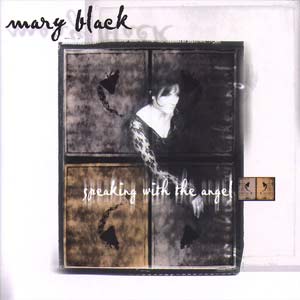
Mary Black – Babes In The Wood (1991) – The Grapevine Label
Mary Black – Babes In The Wood (1991) – The Grapevine Label stands out because of its an early-1990s folk recording with acoustic instrumentation and a natural vocal centre. Rather than chasing spectacular detail for its own sake, the recording gives the listener a useful window into vocal timbre, guitar attack and spatial layering. It can therefore serve as both music and a practical reference when evaluating a revealing stereo system.
TRACK LIST

- LabelThe Grapevine Label
- CountryEurope
- Release date1991
- GenreRock
- FormatFlac 16bit/44.1kHz
Sound Quality
The recording rewards attention to texture rather than sheer brightness. Vocal timbre, guitar attack and spatial layering Good playback should preserve the natural weight of the lower register, the expressive information in the midband and the fine edge of transients. When those elements remain coherent, the music gains a convincing sense of physical presence instead of sounding like a collection of isolated hi-fi effects.
Audiophile Listening Experience
For system evaluation, the useful question is not whether the recording sounds impressive immediately, but whether it stays convincing across its changing textures. Begin with the title song and listen for the recording's natural perspective before moving to the most exposed vocal performance for a stronger test of dynamics and separation. Imaging, tonal balance and transient behaviour should remain consistent. When the system is well matched, the music becomes easier to follow because the recording space and instrumental relationships feel stable.
Reference Tracks
Reference Tracks: Useful starting points are the title song; the most exposed vocal performance; the busiest ensemble arrangement. They expose vocal timbre, guitar attack and spatial layering in different ways, from intimate passages to more energetic sections. On a transparent system, the contrast should be obvious without any part of the spectrum becoming detached from the musical whole.
Audiophile Verdict
The lasting appeal of Mary Black – Babes In The Wood (1991) – The Grapevine Label is its ability to make system evaluation feel like music rather than measurement. Its strengths in vocal timbre, guitar attack and spatial layering give audiophiles several useful listening targets, while the performances provide enough character to keep the disc enjoyable beyond a single equipment comparison.
For repeated comparisons, keep the playback chain and listening position fixed. The most meaningful clues are usually small: a bass note becoming easier to follow, a vocal moving slightly forward, a cymbal decaying more naturally, or the room around a performance becoming easier to perceive.